MHP recognises young journalism talent

MHP Communications has announced its 30 To Watch 2016, its annual list of young journalists who are “making a difference” to the UK media industry.

Ian Kirby, head of media at MHP, said: “Now in its fifth year, the MHP 30 To Watch continues to champion the rising stars of the media industry, and those who we believe will make the future for the sector particularly vibrant.

“This year’s journalist nominations were particularly strong – so much so that we had to award six Gold winners for the first time. We have been highly impressed by the quality of the longlisted journalists which the judges had to deliberate long and hard over to whittle down.”

The 30 To Watch 2016 are:

  • Luke Jones, BBC, Producer
  • Amelia Butterly, BBC Newsbeat, Online journalist
  • Jamie Ross, Buzzfeed, Scotland Correspondent
  • Rossalyn Warren, Buzzfeed, Staff writer
  • Larisa Brown, Daily Mail, Political and Defence Correspondent
  • Andy Pearce, Financial News, Asset Management Reporter
  • Seb Payne, Financial Times, Digital Comment Editor
  • Conrad Quilty-Harper, GQ, News Editor
  • Tyrone Francis,  ITV News, Broadcast Journalist
  • Vicki Owen, Mail on Sunday, Business Correspondent
  • Simon Murphy, Mail on Sunday, Reporter
  • Marie le Conte, Evening Standard, London diary columnist
  • Jessica Hamzelou, New Scientist, Biomedical News Reporter
  • Luke Lythgoe, Press Association, Staff writer on Snappa desk
  • Darren McCaffrey, Sky News, Political correspondent
  • Tara Mulholland, Sky News, Social Media Producer
  • Kate McCann, The Telegraph, Senior Political Correspondent
  • Marion Dakers,  The Telegraph, Financial Services Editor
  • Sebastian Joseph, The Drum, News Editor
  • Jeremy Cliffe, The Economist, Bagehot columnist
  • Patrick Kingsley, The Guardian, Migration Correspondent
  • Sam Blackledge, Plymouth Herald, Chief Reporter
  • Caroline O’Donoghue, The Pool, Social Media Manager
  • Lee Price, freelance (formerly Feature Writer and Games Editor for The Sun)
  • Lauren Probert, The Sun, Reporter
  • Phoebe Luckhurst, The Tab, National Editor
  • Ben Riley-Smith, The Telegraph, Political Correspondent
  • Lucy Fisher, The Times, Senior Political Correspondent
  • Jamie Clifton, VICE, Deputy Editor
  • George Arbuthnott, The Sunday Times, Deputy Insight Editor

Special Gold Awards were given to:

  • George Arbuthnott, The Sunday Times, Deputy Insight Editor
  • Darren McCaffrey, Sky News, Political correspondent
  • Larisa Brown, Daily Mail, Political and Defence Correspondent
  • Rossalyn Warren Buzzfeed Staff writer
  • Lee Price, The Sun, Feature Writer and Games Editor
  • Simon Murphy, Mail on Sunday, Reporter

The judges who decided on the Gold Awards included Kirby; Emily Ashton, senior political correspondent at BuzzFeed and former 30 To Watch winner;  Adam Batstone, head of digital at MHP and ex-BBC journalist; and Sophy Ridge, senior political correspondent at Sky News and former 30 To Watch winner.


Amazon hires Ruwan Kodikara in corporate comms role

Ruwan Kodikara, a former special adviser to the deputy Prime Minister, has been appointed as senior manager of corporate communications at Amazon UK.

Kodikara will join late next month from public affairs agency Quiller Consultants, where he is a senior consultant.

He will report to Amazon UK’s director of communications Dan Perlet and his role will cover comms planning and CSR.

Kodikara was at Number 10 as head of media and special adviser to then deputy Prime Minister Nick Clegg from January until May 2015, when Clegg’s Liberal Democrats were voted out of government.

In addition, he spent an earlier period at Quiller and also worked at consultancy MHP.

Red Consultancy wins WorldRemit brief

WorldRemit, the UK’s fastest-growing tech company according to Deloitte, has appointed Red Consultancy as its UK comms agency.

The WorldRemit app lets people send money instantly to their friends and family in other countries, all over the world.

Red, which won the account following a competitive pitch, has been handed a consumer and industry brief to raise brand awareness of WorldRemit among its target audience in the UK, as well promote its work to potential investors and other stakeholders in the tech world.

The account will be led by Red’s consumer MD, Emily Morgan.

Ben Leong, head of PR at WorldRemit, said: “Red Consultancy has both the wide-ranging sector expertise and the creativity that we need from our UK PR agency. Crucially, they really understand how we want our brand to be shaped through comms. We’re looking forward to what we can achieve together.”

Morgan added: “For WorldRemit we created a truly blended team from across our agency to allow us to deliver tailored comms for industry as well as migrant audiences. It’s exciting to be working with a company full of such potential and ambition.”

Burson-Marsteller to promote Aarhus as culture capital

Burson-Marsteller’s brand and consumer practice has been chosen to promote Denmark’s second largest city, Aarhus, in the run-up to its year as the European Capital of Culture 2017.

The agency has been briefed to drive consumer and media awareness of the city’s attractions and maximise its international visibility.

Dennis Abbott, MD of comms at Burson-Marsteller, and former EU Commission spokesperson for culture, will lead the project.

Abbott said: “Being named European Capital of Culture is an unparalleled opportunity to showcase all that Aarhus has to offer. Our work will focus on communicating Aarhus’ 2017 programme of arts and cultural events to UK travellers and other international visitors. In particular, we’ll be promoting the new travel links between the UK and this Danish city.”

All Star Lanes chooses Belt & Braces

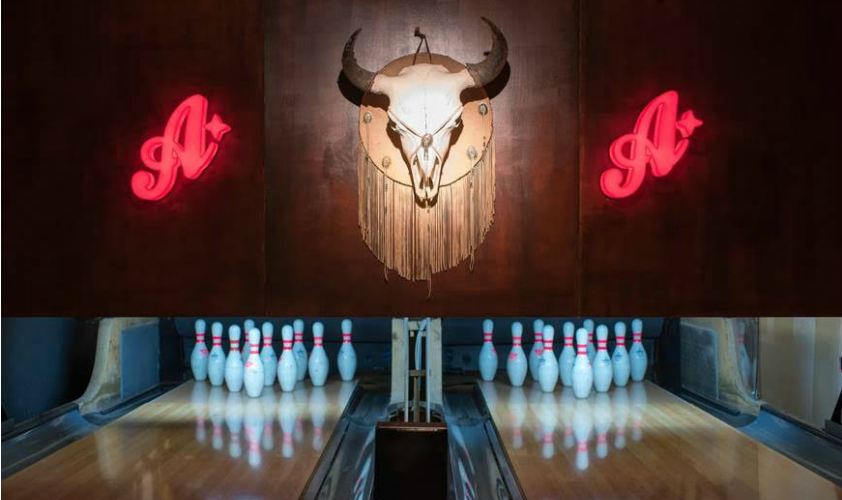
Boutique bowling brand All Star Lanes has appointed Belt & Braces as its retained PR agency.

Belt & Braces


Belt & Braces has been briefed to lead comms activity across All Star Lanes’ London venues in Holborn, Bayswater, Brick Lane and Westfield Stratford, as well as its Manchester location, with a focus on promoting the brand’s food and drink credentials.

The team will also work on a series of projects throughout the year, raising the profile of All Star Lanes’ cocktail creations and American menu.

Jeni Fine, head of marketing at All Star Lanes, said: “The Belt & Braces team presented engaging and captivating concepts that showed true insight into our brand. The team are also a great cultural fit for us, offering food and drink experience balanced with impressive entertainment credentials.”

Phil Savage, Belt & Braces founder , added: “Ten years ago All Star Lanes dragged ten pin bowling kicking and screaming from Britain’s long forgotten dual-carriageways into the heart of London’s social scene. The brand has always been unique and truly brave – our upcoming campaigns aim to reflect these attributes.”

Best workplace ranking features four PR agencies

Firstlight (pictured above) and three other PR agencies have been featured in the 2016 edition of Great Place To Work’s employer rankings.

Firstlight, a business-to-business and health PR agency, was placed at number 11 in the UK’s Small Workplaces category which features companies employing between 20 and 49 staff.

Three other agencies were included in the list of the top 50 medium-sized workplaces: corporate specialist Lansons was ranked number 15 and is just behind Virgo Health which appears at number 14. Ketchum is featured at number 50.

According to Great Place to Work: “The primary criteria for list inclusion is whether a company’s employees themselves say their organisation is a great workplace. Two-thirds of the scoring of each company is based on employees’ responses to a randomly distributed employee survey, which is taken anonymously and is a representative sample of each company’s population. The remaining third is based on our analysis of the company’s programmes and practices compared with other applicants.”

Why PR should learn to embrace diversity

WarrenJohnson-240Warren Johnson, founder of W Communications, says the launch of digital agency fortysix last week at Ad Week Europe has reinvigorated the diversity debate and offered a lesson for PR.

Fortysix is part of advertising group Dentsu Aegis Network [parent company of a W client] and will be made up of digital native talent from diverse backgrounds who wouldn’t normally get the opportunity to work in marketing.

The news was not a complete surprise given how long DAN’s UK chief, Tracy De Groose, has been campaigning for real change in this space.

As a white middle-class male, it may seem brazen for me to join a discussion on the industry’s diversity (or lack thereof). However, I absolutely applaud the entrepreneurial spirit that this new agency embodies.

Having worked in PR for 15 years, I have seen our industry stumble around this topic for far too long. It has collectively failed to foster a community of smart, creative, committed and, most crucially, diverse individuals.

The shocking fact that only 9% of PR practitioners are from non-white backgrounds speaks for itself. Most PR agencies house a monotonous species of white, middle-class, heteronormatives.

Fortysix is a call to action for an industry that has long wrestled with the twin challenges of diversity and authenticity, and PRs would do well to take note.

The MOBO Organisation [a former W client] is already doing plenty to promote the next generation of creative talent, while raising awareness of the discrimination facing minorities in the creative industries.

Last year, it revealed a mere 11% of creative economy jobs are filled by BAME (black, Asian and minority ethnic) individuals, while women make up only 37% of jobs in this sector.

The takeaway for PRs is that diversity is not simply a numbers game, in which agencies must reach a certain “quota of diversity” to tick an HR box.

Rather, as MOBO’s founder Kanya King said: “We need our creative industries to reflect the general population, not only for social justice, but to enable it to flourish.”

As social media brings people closer together, PR needs a diverse workforce that understands the growing complexity and diversity of the audiences they want to engage with to help capture business opportunities and drive higher impact campaigns that actually resonate with consumers in the right way.

De Groose’s decision to launch fortysix is testament to how big an issue diversity has become, and highlights the need for action in our own industry.

It’s clear that we have the opportunity to take things even further, by weaving diversity into every aspect of the work we do to build an industry that is perfectly in sync with the people it most wants to influence.


European train ticketing company hires Havas PR

Havas PR (pictured) has been appointed as the corporate PR agency for the UK arm of Voyages-SNCF, the European rail ticket sales subsidiary of SNCF, the French national train company.

Voyages-SNCF sold tickets in more than 30 countries last year and is seeking to strengthen its position relative to other travel companies in the UK.

It has tasked Havas PR with helping it showcase the innovations in train travel booking for which it is well-known in France to a UK audience.

Nigel Hughes, a board director at Havas PR who will be heading up the account, said: “Voyages-sncf.com is an industry-leading e-commerce travel brand with a strong business story to share, especially as it builds on its current position as the UK’s leading provider of European rail tickets, with its digital innovations and experience in ticket sales for European high speed rail.

“We are really pleased to take on the challenge of this brief ahead of Euro 2016 taking place this summer and thousands of great deals rail tickets on offer to France and beyond.”

What can VR do for PR? Ten things you need to know

During a Gorkana webinar yesterday, Matt Glass, co-founder of Cultural Reality Co., and Dynamo’s head of VR, Nick Morey, offered up their top tips for what impact VR could have on the PR industry.

Virtual Reality 4


Virtual Reality is set to be one of the big technology trends in 2016, with the BBC declaring it to be the year that “VR goes from virtual to reality”.

Two agencies, Dynamo PR and newly-founded Cultural Reality Co., have responded to the opportunity in a total VR market which could be worth up to $5.1 billion by the end of the year.

In January, Dynamo launched a dedicated VR division, led by Nick Morey. Visual computing company NVIDIA came in as the division’s founding client briefing the agency to promote its VR graphics, which led to the team taking journalists into “the world’s most realistic simulation” in below zero temperatures to show off Everest in VR.

Matt Glass and Charli Morgan, The Cult PR founders have gone a step further and, in February, launched a separate VR company, Cultural Reality Co., in anticipation of the launch of Facebook-backed VR headset Oculus Rift. CRC offers to help journalists, as well as PR and marketing firms, use VR in their jobs.

In an exclusive webinar briefing with Gorkana, Morey and Glass offered their top tips on what VR could offer for PRs:

It’s not a fad

There has been initial resistance to the idea of VR, according to Glass. “Big players have a lot of money resting on this. Samsung, Facebook, Nokia, Google, Apple (maybe) want this to succeed. It’s an industry that’s here to stay,” he said.

VR is new so be realistic

There are limitations. Brands might think they can drop their target customer into an all singing and dancing scenario, having them “back flip off a helicopter”, but the technology is not quite there yet. Be realistic.

Experience is everything 

You can watch videos, listen to podcasts or play games, but you can only ever “experience” VR. The only way a brand will know whether VR will work for it is if it’s tried, tried and tried again, Morey and Glass insisted.

Look to the games industry

Go to games events. You’ll get a much better insight into the development process, Morey suggested, and you’ll witness some “breathtaking” creativity. This will help you shape ideas and build a VR campaign that is both realistic and fits with your brand objectives.

The ‘isolation’ of VR is a golden opportunity for brands

An advert on the TV or in a magazine can be skipped or ignored. When someone is looking at your virtual reality video, they are only looking at whatever it is you’re putting in front of them. You decide what they experience.

Take the PR stunt to another level

Consumers can experience a stunt, not just watch it. But, unlike physical events, you also don’t have to worry about the health and safety implications of a flashmob, or whether people will turn up, or if you’re allowed to film in a certain location.

There needs to be an emphasis on quality over quantity

What medium do you actually need? Would a 2D video or experiential activity suffice? If you want to create an experience that is currently unachievable (has the building you’re promoting been built yet?), VR has something to offer.

VR is expensive

In effect VR can be a website, an e-commerce store, an app and an experience all in one go. But there are matching production costs.

VR can’t be an afterthought in a campaign

A good quality two to three minute VR video will cost around £30,000, Glass suggested, and VR content can take a relatively long time to create.

Are you PR-ing your brand or are you PR-ing VR?

Finally, is it a fun experience? There’s no need to show off too much. “It’s like having too many special effects in a movie,” Glass added. “After a while it can get boring”.


Here’s what some of you had to say during the webinar:

You can find about more about our Gorkana webinars here.

How Twitter’s ‘live’ offering will provide value for PR

Twitter reported its financial results for the quarter ending on March 31 this week, highlighting its ‘live’ strategy for 2016, which will focus on creating more premium content, particularly in the sports sector. Gorkana speaks to sports agencies M&C Saatchi Sport & Entertainment and Calacus to find out what this means for PR.

Twitter has some way to go to catch up with peers such as Facebook when it comes to making profits and the size of its user base. Part of its strategy for growth involves delivering more premium live content, particularly video, for users to engage with. To put this in context, here are the areas Twitter is focusing on, in particular, as explained by key executives in its earnings statement for Q1 2016.

  • Twitter’s focus on live content

Although Twitter’s CEO Jack Dorsey has noted it has had a focus on live content ‘for over 10 years’, the platform hopes to present more live opportunities by covering large-scale events in sports, politics and entertainment and opening up more video streaming opportunities.

During the platform’s earnings’ call, Dorsey addressed his plans on live content saying: “We believe we have a leadership position in it, but it’s not just about a live event, it’s also about hosting a conversation around a live event. Twitter has always been the best place to bring people around a particular shared experience.”

  • Twitter’s focus on video

The social platform primarily hopes to lead these ‘live’ conversations through the use of video with Twitter-owned products such as Vine and Periscope and also via auto-play ads on Amplify, its ad network.

Dorsey said: “Periscope is a great example of this, where we think we do have a significant leadership position in live streaming video and we want to make sure that is the best, not only for broadcasters, but for their fans and the fan base that watch those Periscopes.”

  • Twitter and sports partnerships

The company holds up its recent partnership with the NFL as an example of how it hopes to deliver its live strategy. As NFL’s streaming partner, Twitter will deliver live and premium content for logged in, logged out and syndicated users, during Thursday night American football games.

These are the types of partnerships Twitter hopes to promote to ensure more engagement. “As soon as we announced that deal, almost every league in the world contacted us, because they want to provide an even better experience for their fans,” Dorsey added.


Haran Ramachandran, head of digital at M&C Saatchi Sport & Entertainment, said there is PR value to be found with Twitter’s ‘live’ focus: “The PR opp for brands comes through partnering with them on facilitating these events. Twitter experimented with this sort of thing in 2012 – it created a product called Hashtag Pages which were designed to house all conversation around a given event. It was trialled with Nascar but never took off.

“A brand might be able to create something similar around an NFL broadcast on Twitter – owning a particular area like nomination of MVP or providing live reaction from a former player on Persicope. This sort of thing generates coverage as it’s a new form of engagement.”

David Alexander, Calacus’ managing director said these new developments don’t change the fundamentals of successful PR using Twitter. He added: “From a PR perspective, the rules remain the same, whatever the channel – the content has to be relevant, genuine and engaging without being a hard sell.”